Always check who actually conducted the research. Independent, third-party trials run by credible research institutions, not the company marketing the product, are more trustworthy and less prone to bias.
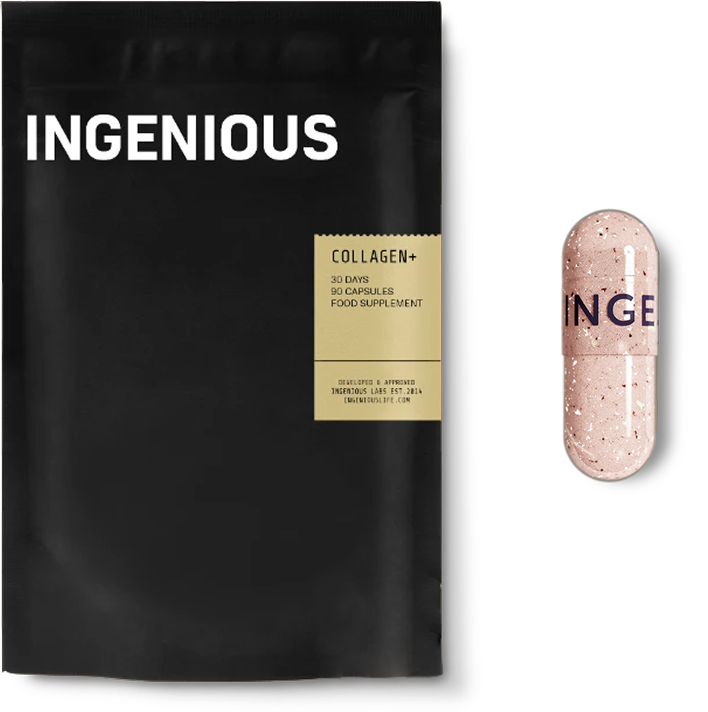
Ingenious was tested by Cutest, the UK’s leading dermatological lab, following pharmaceutical-level protocols and full transparency.

Be cautious about where the trial was conducted. Trials in regions with strong scientific and ethical standards, like the UK, are typically more reliable. But beware: Some companies may base their operations in countries with weaker regulations, allowing them to use questionable methods or make dubious claims.
Ingenious conducted its trial in the UK, following rigorous protocols and ethical standards on par with pharmaceutical studies.

The trial’s sample size matters. Too few participants can undermine the reliability of the results. Look for trials that include a sufficient number of subjects to ensure that the findings are meaningful and applicable to a broad audience.
Ingenious tested 116 women aged 30–60, providing a robust sample size for meaningful, reliable results.

Don’t settle for vague claims. Look for evidence that the results are statistically significant, which means the findings are reliable and not just random chance. Many companies make bold claims based on results that aren’t significant at all, yet present them as proof of efficacy. It’s a clever way to mislead consumers into believing a product works when it doesn’t.
Ingenious results were statistically significant, showing clear improvements in skin hydration, elasticity, and reduction of fine lines and wrinkles.

A credible trial is published in a reputable, peer-reviewed journal. This ensures that experts in the field have scrutinised the research and verified its reliability. Beware of companies that publish their findings in low-tier, obscure journals, often online-only and lacking any true credibility. This is yet another strategy to mislead the consumer.
Ingenious clinical trial results are currently awaiting peer review in the prestigious US Journal of Dermatology, ensuring the highest level of scientific scrutiny.

Transparency is key to trustworthiness. A reliable trial will clearly outline how it was conducted, how participants were selected and how data was collected. This transparency ensures the research can be independently verified. And in skin-related studies, it’s crucial that the measurements are dermatologically valid, meaning they accurately assess the claims made.
Ingenious trial methods were fully transparent, with dermatologically valid measurements and independently verifiable data for every participant.

A genuine clinical trial tests the exact benefits the product claims to deliver. If it promises to improve skin or reduce wrinkles, the trial should demonstrate clear, measurable improvements. Anything less than that and you’re looking at a study that doesn’t hold up.
In a 12-week placebo-controlled trial, 98% of Ingenious participants saw measurable improvements in hydration, elasticity, and reduction of fine lines and wrinkles.

It should also be noted that the study ought to include a placebo group, just as a pharmaceutical trial would. Without a placebo, any observed improvement could be attributed to a range of other factors. In the absence of a placebo, there is no reliable way to determine whether the supplement itself was responsible for the benefits reported.
Half of the 116 participants received Ingenious Collagen+, and the other half received a placebo, ensuring results reflect the true effects of the supplement over 12 weeks.